
Sewer Line Replacement in Boulder, CO
When a sewer line is collapsed or failing along its length, replacement is the lasting answer. Trenchless methods can minimize disruption to the property where conditions allow.
- Residential and commercial requests
- Boulder-area service coverage
- Free, no-obligation estimate request
Service at a glance
- Best suited for
- A collapsed, bellied, or failing line that repair alone can't restore.
- Common signs
- Backups keep returning, or a camera shows collapse, breaks, or severe corrosion.
- Tools that may be used
- Sewer camera inspection, line locating, excavation or trenchless equipment
Related service
Sewer Line RepairWhen does a sewer line need to be replaced?
Quick answer
A sewer line needs full replacement when the pipe is collapsed, corroded or root-damaged along most of its length, has multiple bellies or breaks, or is made of failed material like Orangeburg. When repairs would only patch a pipe that's failing throughout, replacement is more cost-effective. A camera inspection confirms which is warranted.
Some lines are past the point of repair. Patching one section of a pipe that's failing along its length only delays the next failure.
Replacement uses either trenchless methods — pipe bursting, or lining where suitable — that install new pipe along the existing path with small access pits, or traditional open-trench replacement where conditions require it.
- Licensed & insured
- 24/7 emergency availability
- Same-day service options
- Drain and sewer specialists
Sewer Line Replacement in Boulder, CO by Boulder Drain Cleaning. Licensed and insured drain and sewer service support for homes and businesses across Boulder and nearby areas.
When a pipe has collapsed, corroded through in multiple places, sagged into several bellies, or reached the end of its material life, replacement installs a new line built to last decades.
Trenchless pipe bursting installs new pipe through the path of the old one with only small access pits, preserving driveways, trees, and landscaping. Open-trench replacement is used where the route or conditions require it.
Older Boulder neighborhoods still have clay, cast-iron, and occasionally Orangeburg laterals well past their service life. A planned replacement is far less disruptive than an emergency one after a collapse.
Replacing a sewer line that is collapsed or deteriorated beyond repair, using methods such as pipe bursting or open-trench excavation.
When To Use This Service
Is sewer line replacement the right call?
Use these scenarios as a quick decision guide. If several apply, this is likely the service to request — though a provider confirms the cause on site.
A camera inspection shows the line is collapsed or broken along much of its length.
Repeated repairs and cleanings have failed to provide lasting relief.
Multiple defects exist along the line rather than a single isolated point.
The pipe material has deteriorated to the point that it can no longer be relined.
Severe offsets or bellies prevent the line from carrying flow reliably.
Inspection indicates ongoing infiltration or root intrusion at many points.
A provider has determined the line is beyond what repair methods can address.
Clogged drain service or sewer-line service?
A quick way to tell whether the problem is local or in the main line.
Clogged drain service
- Usually one fixture or branch line
- Localized symptoms
- Other fixtures work normally
Sewer-line service
- Several fixtures affected
- Backup at a low drain
- Toilets and drains react together
Warning Signs
Know the warning level
Drain symptoms tend to escalate. Catching them at the early or recurring stage is far easier than handling an urgent backup.
- Drainage is slower than usual
- Occasional gurgling from a drain or trap
Good time to request service before it worsens.
- Frequent backups that return no matter how often the line is cleaned
- A camera inspection showing collapse, multiple breaks, or pervasive corrosion
- Persistent sewer odor and soggy ground along the line
- Sinkholes or surface depressions over the sewer route
- Orangeburg or very old clay pipe documented in the line
- Repair estimates approaching the cost of replacement
Worth diagnosing the cause so it stops returning.
- A fully collapsed line leaving the home with no usable drains
- Raw sewage backing up into living space
- A sinkhole opening over the sewer line
- Sewage contaminating the yard or a neighboring property
Common Causes
What leads to sewer line replacement
Total pipe collapse
A caved-in pipe blocks flow completely and can't be cleared or spot-repaired.
End-of-life material
Orangeburg, deteriorated cast iron, and brittle old clay reach a point of whole-line failure.
Widespread root damage
Roots that have fractured the pipe in many places leave too little sound pipe to repair.
Multiple bellies
Several sagging sections indicate the bedding has failed along the line.
Severe corrosion
Cast-iron lines corroded through in multiple spots can't be reliably patched.
The Project
How a sewer line replacement is planned
A bigger decision — weighing options, access, and property impact.
Camera assessment & locate
Inspect and map the full line to confirm replacement is warranted and plan the route.
Method & quote
Review trenchless (pipe bursting) or open-trench options, permitting, and a quote.
Prepare the site
Set up access pits or the trench and protect the surrounding area.
Install the new line
Burst the old line and pull new pipe through, or lay new pipe with proper bedding and grade.
Inspect, backfill & restore
Camera-verify the new line, pass inspection, backfill, and restore the surface.
Inspection & Diagnosis
Inspection & diagnosis for sewer line replacement
Replacement is a significant decision, so it generally follows a thorough camera inspection and a clear understanding that repair is not viable. A provider may evaluate the extent of the damage, the pipe's depth and path, soil and surface conditions, and the locations of connections and cleanouts. Locating the line accurately is important because it influences which replacement method is feasible and how disruptive the work will be.
The assessment also considers whether a trenchless method such as pipe bursting is suitable or whether open-trench excavation is necessary. Pipe bursting can replace a line along its existing path with limited surface disruption under the right conditions, while open excavation provides full access but involves more extensive digging. Surface features, alignment changes, depth, and access all factor into which approach an available local service provider may recommend.
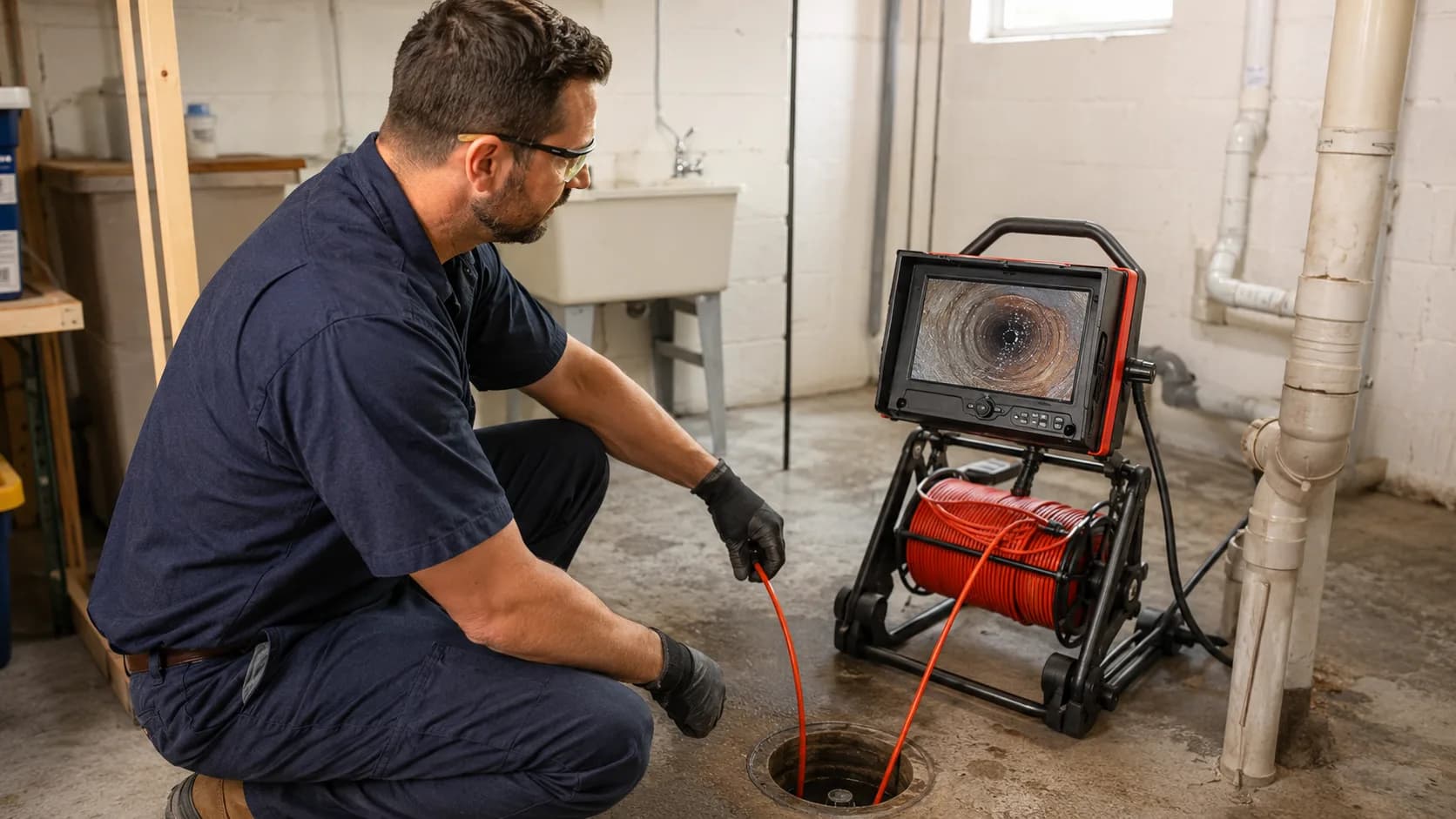
Limitations
What this service can't do
Every service has limits. Knowing them helps you request the right one.
- Replacement is the most involved option and typically requires excavation in some form.
- Trenchless pipe bursting is not feasible in every situation, depending on conditions and alignment.
- Surface features such as driveways, landscaping, or structures can complicate access.
- Permitting and inspection requirements may apply and can affect timelines.
- Underground utilities near the line must be located and protected before work begins.
- Even a new line still requires sensible drain habits to stay clear over time.
When You May Need Another Service
Situations that call for something else
Inspection reveals only a single localized defect in an otherwise sound line.
When damage is contained to one section, a targeted repair is often sufficient and less disruptive than replacing the entire line.
Sewer Line RepairThe line is blocked but its structural condition has not yet been confirmed.
A camera inspection is needed to confirm that the line is truly beyond repair before committing to full replacement.
Sewer Camera InspectionBuildup is preventing a clear view of the pipe's true condition.
Clearing roots or grease first allows an accurate inspection so the right long-term decision can be made.
Sewer Line Cleaning
Compare Services
How replacement methods compare and where replacement fits versus repair.
| Factor | Pipe Bursting | Open-Trench Replacement |
|---|---|---|
| Surface disruption | More limited along the path | More extensive across the dig area |
| Pipe path | Follows the existing alignment | Allows realignment if needed |
| Best suited to | Replaceable lines with workable access | Complex layouts or obstructed paths |
| Access points | Entry and exit pits | A continuous open trench |
| When chosen over repair | Whole line is failing, not one spot | Whole line is failing, not one spot |
The Value
What sewer line replacement accomplishes
Long service life
Modern HDPE or PVC is built to outlast failed clay, cast iron, or Orangeburg pipe.
Trenchless minimizes disruption
Pipe bursting replaces the line with minimal digging where conditions allow.
Ends repeat problems
Replacement resolves chronic backups instead of patching a failing pipe.
Documented result
Camera footage of the completed line provides a clear record.
Applications
Residential & commercial use

For homeowners
Full sewer line replacement is usually reserved for homes where the line has failed broadly, such as a collapsed pipe or widespread deterioration that repeated repairs cannot resolve. It is the most substantial of the sewer services because it addresses the entire run rather than a single section. A confirmed inspection showing the line is beyond repair is an important basis for this decision.
Homeowners considering replacement often want to understand whether a trenchless method is possible to reduce surface disruption, or whether excavation is required. When you request drain service for a failing line, an available local service provider can review the inspection findings and explain which replacement methods are feasible given the line's path, depth, and the property's surface conditions.
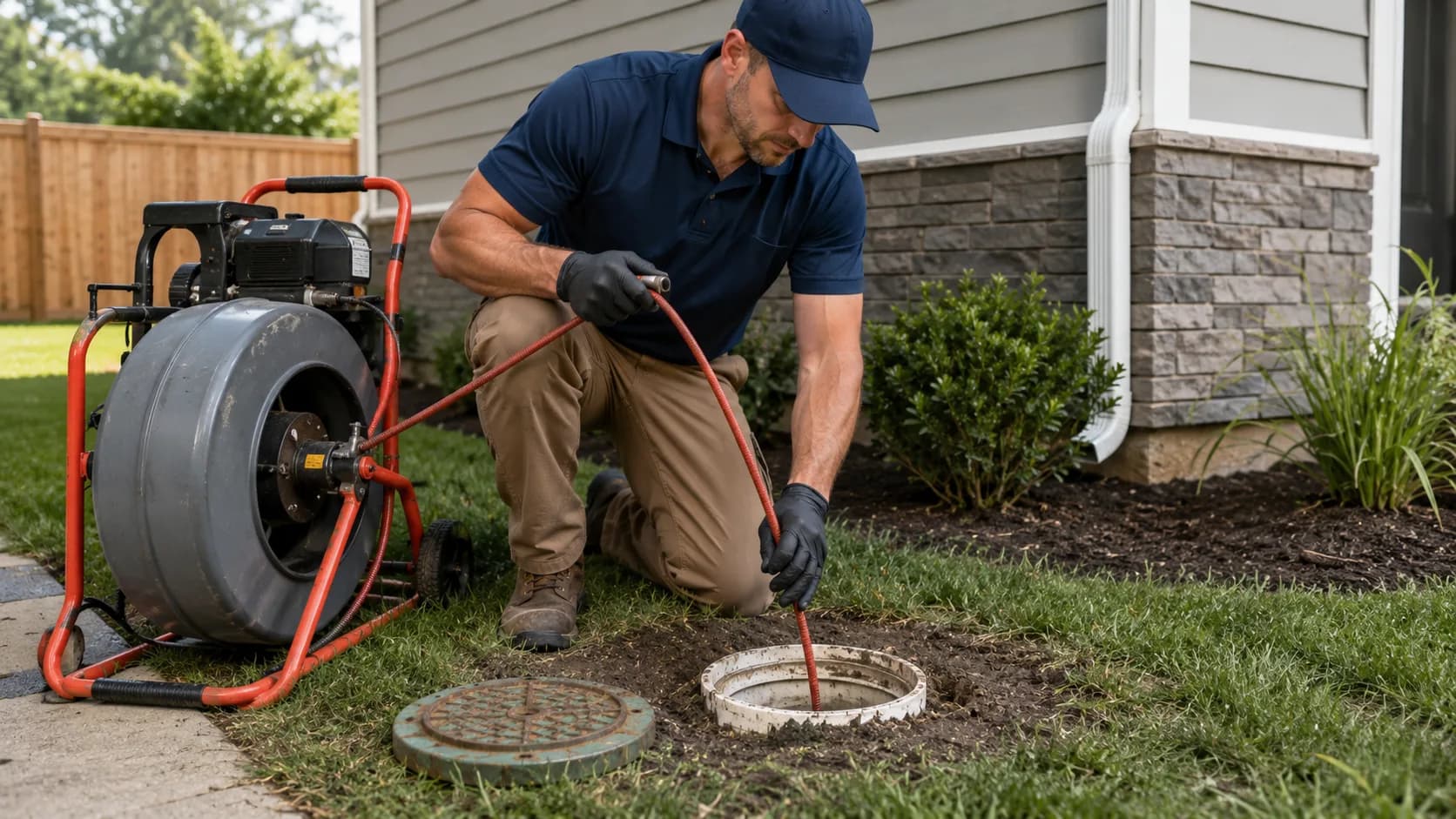
For property managers & businesses
For commercial properties, sewer line replacement carries added considerations because business operations, parking areas, and surface features may all be affected by the work. Property managers typically weigh the disruption of replacement against the cost of continued failures, particularly when a line repeatedly backs up and interferes with daily operations. A clear inspection helps justify the scope of work.
Coordinating replacement at a commercial site often involves planning around access, occupancy, and any applicable permitting. When you request drain service for a commercial line that may need replacement, sharing inspection records, site plans, and the property's usage patterns helps an available local service provider assess feasible methods and the likely impact on the site.
Cost Factors
What affects the cost of sewer line replacement
Pricing varies by situation and is set by the provider. These factors influence it.
Replacement method
Trenchless bursting and open-trench replacement differ in equipment, labor, and restoration.
Length & depth
Longer and deeper lines require more pipe, labor, and excavation.
Surface restoration
Pipe under driveways, sidewalks, or mature landscaping adds restoration cost.
Permits & inspection
Local permitting and required inspections factor into the total.
Connections & cleanouts
New cleanouts and the connection to the main or septic tank affect scope.
Questions To Ask
Questions to ask a service provider
Bring these to any provider who follows up on your request.
- What did the inspection show that indicates the line is beyond repair?
- Is pipe bursting feasible here, or is open-trench excavation required?
- How will surface features like driveways and landscaping be affected?
- What permitting or inspection requirements may apply to this work?
- How will underground utilities near the line be located and protected?
- What is the expected disruption and timeline for the chosen method?
- What restoration of the surface area is included after the work?
How to prepare
- Gather any camera inspection reports and prior repair history to share.
- Locate site plans or records showing the sewer line path if available.
- Identify surface features above the line such as paving, decks, or gardens.
- Ask whether utility locating will be arranged before any excavation.
- Plan for limited water use and possible access disruption during the work.
- Discuss surface restoration expectations before the work begins.
Safety guidance
- Stay well clear of open trenches and excavation equipment at all times.
- Never enter a trench, which can collapse without warning.
- Ensure underground utilities are located and marked before digging.
- Keep children and pets away from the entire work area.
- Treat exposed pipe and excavated soil as contaminated.
- Follow all guidance about water use and site access during the project.
Prevention & maintenance
- Once replaced, keep grease and non-degradable items out of the line.
- Avoid planting aggressive-rooted trees near the new line's path.
- Schedule periodic inspections to monitor the new line's condition over time.
- Address minor backups early before they stress the system.
- Keep documentation of the replacement for future reference and resale.
- Be mindful of heavy loads or construction over the line's path.
Why A Professional
Why sewer line replacement is best handled by a professional
Replacement must meet code and slope requirements — a line installed at the wrong grade will sag and fail again. Qualified professionals handle permitting, utility locating, proper bedding and slope, and the required inspection.
Trenchless pipe bursting also requires specialized hydraulic equipment and experience to install safely without damaging nearby utilities.
In the Boulder area
Boulder's historic core, including Mapleton Hill, Whittier, and University Hill, contains many Victorian-era homes still running their original clay and cast-iron sewer laterals. After more than a century in the ground, some of these oldest lines reach the end of their service life, with widespread cracking or collapse that repeated repairs cannot resolve.
Whether a given line is truly beyond repair still depends on its actual condition, which must be confirmed through a camera inspection rather than assumed from the home's age. When you request drain service for a failing line, an available local service provider can use inspection findings and site conditions to advise whether a trenchless method or open excavation is appropriate.
Whole-line replacement is most common in the oldest housing stock — the coal-town blocks of Lafayette, the small-town lines of Lyons, and Old Town Longmont — where clay or Orangeburg pipe has reached the end of its life. When only a section has failed, a targeted sewer line repair is usually enough.
Answers
Frequently Asked Questions
Common questions about sewer line replacement.
How do I know if I need replacement instead of repair?
If a camera shows the pipe is collapsed, corroded or root-damaged along most of its length, has several bellies, or is failed material like Orangeburg, replacement is the lasting fix. When repair would only patch a pipe failing throughout, replacement is more cost-effective.
What is trenchless sewer replacement (pipe bursting)?
Pipe bursting pulls a new pipe through the path of the old one while a bursting head fractures and pushes the old pipe outward. It replaces the entire line through small access pits instead of a full-length trench.
How long does a replacement take?
Most residential replacements take roughly one to three days depending on length, depth, method, and restoration. Trenchless replacement is often faster than open-trench work.
Will you need to dig up my whole yard?
Not with trenchless pipe bursting, which needs only entry and exit pits. Open-trench replacement requires a trench along the line, with the surface restored afterward.
What pipe material is used?
Modern HDPE (for pipe bursting) or PVC, both of which resist roots and corrosion and are rated for decades of service — an upgrade over old clay, cast iron, or Orangeburg.
Do I need permits to replace a sewer line?
Yes. Sewer replacement requires permits and inspection. A qualified contractor handles permitting and coordinates the required inspections.
Can a failing sewer line damage my foundation?
It can. A leaking or collapsed line saturates and erodes soil around the foundation, which can contribute to settling and cracks. Replacing a failing line removes that risk.
How is replacement different from repair?
Repair fixes a specific damaged section. Replacement installs an entirely new line and is appropriate when the pipe is failing along most of its length.
Free Estimate
Request a Free Drain Service Estimate
Share the drain or sewer problem, location, and preferred timing. Your request may be matched with an available local service provider for follow-up.
Any drain or sewer issue
Clogs, recurring backups, sewer-line questions, jetting, rooter, or camera inspections.
What to include
Affected fixtures, what you're seeing, how long it's lasted, and home vs. commercial.
Areas covered
Boulder and nearby communities across Boulder County and the Front Range.
What happens next
Your request may be matched with an available local service provider for follow-up.
Submitting this form allows us to contact you about your request and, where appropriate, connect you with a local service provider.
Form not loading? Open the estimate request.
Related Services
You might also need
Sewer Line Repair
Repairing cracked, offset, or root-damaged sewer pipe — including trenchless options.
View serviceSewer Camera Inspection
Video inspection that shows the inside of a sewer line — roots, cracks, bellies, and blockages.
View serviceSewer Line Cleaning
Clearing roots, grease, and buildup from the main sewer line before it causes a backup.
View serviceSewer Line Replacement requests across Boulder and nearby communities.
Have a drain or sewer problem in Boulder?
Tell us what's happening and request a free estimate from Boulder Drain Cleaning — licensed, insured, and available 24/7 for emergencies.