Clogged Drain Service in Boulder, CO
Slow sink, gurgling tub, or a drain that won't clear? Describe the problem and submit a request for follow-up from an available local service provider.
- Residential and commercial requests
- Boulder-area service coverage
- Free, no-obligation estimate request
Service at a glance
- Best suited for
- A single slow or blocked sink, tub, shower, toilet, or floor drain.
- Common signs
- One fixture drains slowly, gurgles, or backs up while others stay fine.
- Tools that may be used
- Drain auger / cable, hydro jetting, sewer camera inspection
Related service
Rooter ServiceWhat causes a clogged drain?
Quick answer
Most household drain clogs come from grease and food waste in kitchen lines, hair and soap buildup in bathrooms, foreign objects, or — in older homes — tree roots and mineral scale narrowing the pipe. A single slow drain is often local; several at once usually points to the main line.
Clearing a clog properly means removing the whole obstruction, not just poking a hole through it so it returns days later. The right method depends on what's blocking the line and where.
If more than one fixture is slow or backing up at the same time, the issue is likely in the shared main line rather than a single trap — which is worth diagnosing before it becomes a backup.
- Licensed & insured
- 24/7 emergency availability
- Same-day service options
- Drain and sewer specialists
Clogged Drain Service in Boulder, CO by Boulder Drain Cleaning. Licensed and insured drain and sewer service support for homes and businesses across Boulder and nearby areas.
A clogged drain usually starts small — a sink that empties a little slower each week — and can progress to standing water, odors, or a backed-up fixture. Drain clearing addresses the cause of the blockage rather than masking the symptom.
Common household drains include kitchen sinks, bathroom sinks, bathtubs, showers, toilets, floor drains, and laundry standpipes. Cabling (snaking) handles most single clogs; heavier grease or root buildup may call for hydro jetting. A camera inspection helps when a clog keeps returning.
Older Boulder homes, mature trees near sewer lines, and hard water are all factors that can make clogs more frequent — context worth keeping in mind when a drain won't stay clear.
Restoring flow to a single slow or blocked fixture such as a kitchen sink, bathroom sink, tub, shower, or toilet.
When To Use This Service
Is clogged drain service the right call?
Use these scenarios as a quick decision guide. If several apply, this is likely the service to request — though a provider confirms the cause on site.
A single fixture drains slowly or stops draining entirely while other fixtures still work normally.
A bathroom sink or tub backs up due to accumulated hair, soap residue, or grease.
A toilet repeatedly clogs or flushes weakly without affecting other drains in the home.
Gurgling sounds come from one drain when a nearby fixture is used.
A localized branch line serving one or two fixtures shows signs of partial blockage.
A clog returns shortly after a household plunger or store-bought product was tried.
Standing water lingers in a shower pan or sink basin long after use.
Clogged drain service or sewer-line service?
A quick way to tell whether the problem is local or in the main line.
Clogged drain service
- Usually one fixture or branch line
- Localized symptoms
- Other fixtures work normally
Sewer-line service
- Several fixtures affected
- Backup at a low drain
- Toilets and drains react together
Warning Signs
Know the warning level
Drain symptoms tend to escalate. Catching them at the early or recurring stage is far easier than handling an urgent backup.
- Drainage is slower than usual
- Occasional gurgling from a drain or trap
Good time to request service before it worsens.
- Water pools and drains slowly in a sink, tub, or shower
- Gurgling sounds from a drain or toilet when water runs
- Persistent sewer or musty odor near a fixture
- More than one fixture backing up at the same time
- Water rising in another drain when you run the washer or flush
- Drain flies or fruit flies gathering around a sink
Worth diagnosing the cause so it stops returning.
- Sewage backing up into a tub, shower, or floor drain
- Every drain in the home is slow or gurgling at once
- An overflowing toilet that won't stop after shutting the supply valve
- Water pooling near the foundation or in the basement
Common Causes
What leads to clogged drain service
Grease & cooking fat
Fats poured down the kitchen sink cool and harden inside the pipe, narrowing it until water struggles to pass.
Hair & soap buildup
In tubs and showers, hair binds with soap residue into dense mats that trap everything flowing past.
Food waste
Starchy foods, rice, pasta, and coffee grounds swell or compact and don't break down the way disposals suggest.
Foreign objects
Wipes labeled 'flushable,' cotton products, and small items snag in the trap or branch line.
Mineral scale
Hard water can leave deposits that gradually shrink the inside diameter of pipes in older homes.
Tree roots
In aging sewer lines, roots can enter at joints and trap debris, causing repeat clogs.
How It Works
How a clogged drain is cleared
A practical sequence for a single slow or blocked fixture.
Describe the problem
Tell us which fixtures are affected and what you're seeing so the visit is scoped correctly.
Inspect & diagnose
Confirm whether it's a single branch line or a deeper main-line issue before any work begins.
Review the quote
You receive a price to approve before work starts — no work without your go-ahead.
Clear at the source
Cable or hydro jet the line to remove the full obstruction so it doesn't recur next week.
Verify & advise
Test flow, run a camera if the clog has been recurring, and explain how to prevent a repeat.
Inspection & Diagnosis
Inspection & diagnosis for clogged drain service
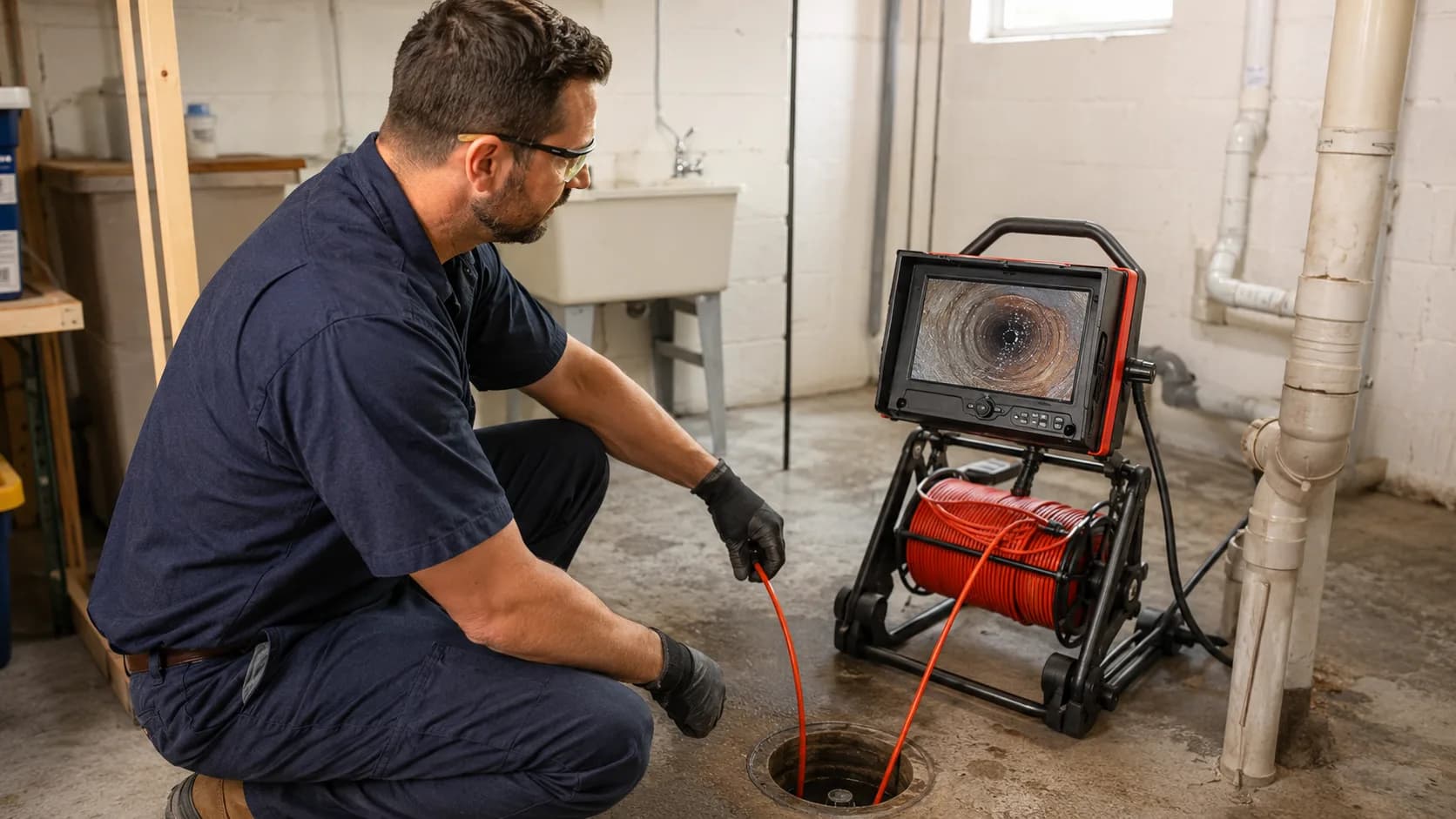
Diagnosis for a clogged fixture usually begins with identifying whether the blockage is isolated to one fixture or affecting a shared branch line. A provider may run water at the affected fixture and observe nearby drains, since multiple fixtures backing up at once can point to a deeper line problem rather than a simple local clog. Visual checks of the trap, pop-up assembly, and visible piping under a sink may also be part of this early assessment.
If the blockage appears localized, the work typically involves clearing the trap or the immediate branch line with a hand auger or small drain machine. A provider may ask about recent symptoms, what was put down the drain, and whether the issue is recurring, because a repeating clog can indicate buildup further along the line or a more significant underlying condition that a basic clearing will not resolve.
Limitations
What this service can't do
Every service has limits. Knowing them helps you request the right one.
- Clearing a single fixture does not address problems in the main sewer line and will not stop backups that originate deeper in the system.
- A successful clearing may be temporary if the root cause is heavy buildup, a venting issue, or a pipe defect rather than a simple obstruction.
- Older or corroded branch piping can limit how aggressively a clog can be cleared without risking damage.
- Chemical drain products used beforehand can complicate the work and may need to be disclosed for safety.
- Some fixture clogs sit beyond the reach of a small auger and may require a larger machine or a different service.
- This service does not include diagnosing or repairing structural pipe damage.
When You May Need Another Service
Situations that call for something else
Multiple fixtures back up at the same time or a floor drain overflows.
Simultaneous backups usually indicate a blockage in the shared main sewer line rather than a single branch, which a fixture-level clearing cannot reach.
Sewer Line CleaningA clog returns repeatedly despite being cleared more than once.
A persistent recurring clog can point to buildup, a bellied section, or a pipe defect that is best confirmed by viewing the inside of the line.
Sewer Camera InspectionSewage is actively backing up into the home and creating a sanitation hazard.
An active overflow is urgent and typically calls for immediate attention rather than a routine fixture appointment.
Emergency Drain Cleaning
Compare Services
How single-fixture drain clearing compares to deeper line services.
| Factor | Clogged Drain Service | Sewer Line Cleaning |
|---|---|---|
| Typical target | One fixture or short branch line | The main line serving the whole property |
| Common cause addressed | Hair, soap, food, grease near the fixture | Roots, grease, and scale in the main line |
| Usual equipment | Hand auger or small drain machine | Larger cable machine or jetting equipment |
| Scope of relief | Restores flow to the affected fixture | Restores flow across multiple fixtures |
| When it falls short | When several drains back up together | When the pipe itself is damaged |
The Value
What clogged drain service accomplishes
Root-cause focus
The goal is to find why it clogged, so you're not paying to clear the same drain every few months.
Pipe-friendly methods
Mechanical clearing and jetting remove buildup without the pipe damage harsh chemical cleaners can cause.
Whole-home awareness
A single slow drain and a main-line problem look similar at first — diagnosing correctly matters.
Clear next steps
You get a plain-language explanation of what was found and what, if anything, to watch for.
Applications
Residential & commercial use

For homeowners
In a home, a clogged drain is one of the most common plumbing complaints and often starts small before becoming a daily inconvenience. Kitchen sinks tend to collect grease and food particles, while bathroom drains accumulate hair and soap residue over time. Requesting drain service for a single slow fixture is usually straightforward, and catching it early can prevent the buildup from spreading further into the branch line.
Homeowners can often slow the formation of clogs with simple habits, but once a fixture stops draining or repeatedly backs up, a hands-on clearing is typically more effective than repeated chemical treatments. When you request drain service, an available local service provider can assess whether the issue is truly isolated or whether the symptoms suggest a larger problem worth investigating.
For property managers & businesses
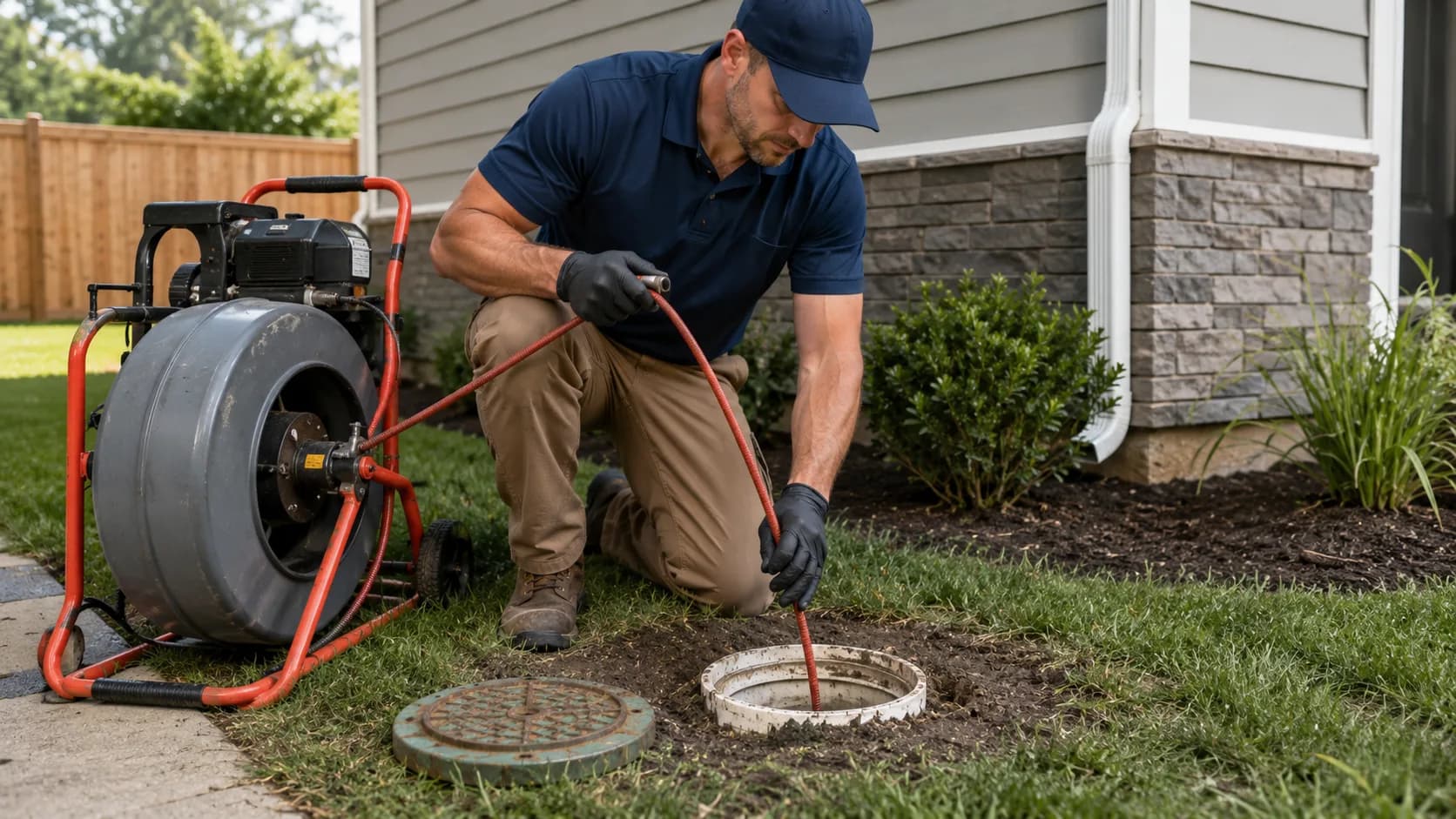
For commercial properties, a single clogged fixture can disrupt operations, especially in restrooms, break rooms, and food-service areas where downtime affects customers and staff. Property managers often prefer to address fixture clogs quickly to avoid complaints and to keep shared facilities usable. A localized clearing is generally the least disruptive option when only one fixture is affected.
Businesses with high fixture usage may see clogs form faster than a typical residence, particularly in kitchens and public restrooms. When you request drain service for a commercial space, it helps to note how many fixtures are affected and how frequently the problem recurs, since this information helps an available local service provider determine whether a simple clearing is appropriate or whether a deeper line issue should be considered.
Cost Factors
What affects the cost of clogged drain service
Pricing varies by situation and is set by the provider. These factors influence it.
Fixture & drain type
A bathroom sink is typically simpler than a main-line or toilet clog.
Severity & location
A clog deep in the line or feeding multiple fixtures takes more equipment and time.
Clearing method
Standard cabling differs from hydro jetting, which is used for heavy grease or roots.
Cleanout access
Easy access through an existing cleanout is simpler than pulling a fixture.
Camera inspection
An optional camera inspection adds cost but is useful for recurring or main-line clogs.
Questions To Ask
Questions to ask a service provider
Bring these to any provider who follows up on your request.
- Does the blockage appear to be isolated to this one fixture, or could it involve a shared line?
- What method will be used to clear this drain, and is it appropriate for my pipe material?
- Have any chemical drain products been used here recently that I should mention?
- What could be causing this clog to keep returning?
- Is there a risk of damaging older piping during the clearing?
- Would a camera inspection be worthwhile if the clog comes back?
- What can I do to reduce the chance of this happening again?
How to prepare
- Clear the area beneath and around the affected fixture so the work space is accessible.
- Note when the problem started and whether it is getting worse or staying the same.
- Make a list of which fixtures are affected and which still drain normally.
- Avoid pouring chemical drain cleaners before the appointment, and mention any that were already used.
- Remove personal items from cabinets under sinks if the trap may need to be opened.
- Have a general idea of the fixture's age or any past drain or sewer work if known.
Safety guidance
- Avoid mixing different chemical drain products, as combining them can release hazardous fumes.
- Do not use a plunger after pouring a chemical cleaner, since splashing can cause burns.
- Keep children and pets away from any standing water that may contain contaminants.
- Turn off the water supply to a continuously overflowing fixture if you can do so safely.
- Wear gloves and wash hands thoroughly after contact with backed-up water.
- Ventilate the room if any chemical products were used before service.
Prevention & maintenance
- Use drain strainers in sinks, tubs, and showers to catch hair and food debris.
- Avoid pouring fats, oils, and grease down kitchen drains; collect and discard them instead.
- Flush only toilet paper and human waste, never wipes or hygiene products labeled flushable.
- Run hot water through kitchen drains after use to help keep residue moving.
- Periodically clean pop-up stoppers and visible traps to remove early buildup.
- Address slow drainage promptly rather than waiting for a complete blockage.
Why A Professional
Why clogged drain service is best handled by a professional
Store-bought chemical drain cleaners often fail to clear a full blockage, can damage older pipe, and leave caustic standing water that makes the next step more hazardous. Mechanical clearing is generally safer and more reliable.
A professional can tell the difference between a simple branch clog and an early sign of a sewer-line problem — a distinction that's far cheaper to act on when caught early.
In the Boulder area
Boulder's newer subdivisions in Erie, Superior, and Gunbarrel are built largely with PVC drain lines, where single-fixture clogs tend to come from grease and hair rather than root intrusion. The older clay and cast-iron branch lines common in the historic core behave differently, so the same slow sink can have very different underlying causes depending on the neighborhood and pipe material.
Many area homes also have basements with floor drains that collect laundry runoff and water-heater discharge, and these can back up when a shared branch line is restricted. If a fixture clog keeps returning or spreads beyond one drain, an available local service provider can determine whether it is a simple local blockage or a sign of buildup further along the line.
Everyday clogs turn up everywhere, but the newer PVC homes in Superior, Erie, and the subdivisions around Broomfield see the most grease-and-hair blockages — the kind a single clearing usually solves. When several fixtures back up together, it's more likely the main line, and sewer line cleaning is the better fit.
Answers
Frequently Asked Questions
Common questions about clogged drain service.
Should I use a chemical drain cleaner first?
Generally no. Liquid drain cleaners rarely clear a full blockage, can damage older pipes, and leave caustic water that makes professional clearing harder. Mechanical clearing is usually safer and more effective.
Why does my drain keep clogging in the same spot?
A recurring clog often means buildup is reforming on a rough spot, the pipe has sagged, or roots are re-entering the line. A camera inspection can pinpoint the cause so it's fixed rather than repeatedly cleared.
What's the difference between snaking and hydro jetting?
Snaking uses a rotating cable to break through and pull out a blockage — good for most single clogs. Hydro jetting uses high-pressure water to scour the full pipe wall and is better for heavy grease, scale, or roots.
Can a clogged drain cause a sewer backup?
Yes. If the blockage is in the main line rather than a single fixture, wastewater can back up through the lowest drains in the home, such as a basement floor drain or ground-floor shower.
Which drains can be cleared?
Kitchen sinks (with or without a disposal), bathroom sinks, tubs, showers, toilets, laundry standpipes, and floor drains can all be cleared.
Will clearing the clog damage my pipes?
Done correctly, no. The cable size and method are matched to the pipe. Older or fragile pipe should be assessed — often with a camera — before high-pressure jetting.
How can I prevent future clogs?
Keep grease and coffee grounds out of the kitchen sink, use drain screens for hair, avoid 'flushable' wipes, and consider periodic maintenance if you have older pipes or nearby trees.
Is one slow drain an emergency?
A single slow drain usually isn't urgent, but it's worth addressing early. Multiple fixtures backing up at once, or sewage surfacing, should be treated as urgent.
Free Estimate
Request a Free Drain Service Estimate
Share the drain or sewer problem, location, and preferred timing. Your request may be matched with an available local service provider for follow-up.
Any drain or sewer issue
Clogs, recurring backups, sewer-line questions, jetting, rooter, or camera inspections.
What to include
Affected fixtures, what you're seeing, how long it's lasted, and home vs. commercial.
Areas covered
Boulder and nearby communities across Boulder County and the Front Range.
What happens next
Your request may be matched with an available local service provider for follow-up.
Submitting this form allows us to contact you about your request and, where appropriate, connect you with a local service provider.
Form not loading? Open the estimate request.
Related Services
You might also need
Rooter Service
Cutting and clearing tree roots from drains and sewer lines, then locating where they entered.
View serviceHydro Jetting
High-pressure water cleaning that scours grease, scale, and roots from the full pipe wall.
View serviceEmergency Drain Cleaning
Help for sewage backups, overflowing drains, and blocked main lines — with safety guidance.
View serviceClogged Drain Service requests across Boulder and nearby communities.
Have a drain or sewer problem in Boulder?
Tell us what's happening and request a free estimate from Boulder Drain Cleaning — licensed, insured, and available 24/7 for emergencies.