Sewer Line Cleaning in Boulder, CO
Your main sewer line carries every drain in the home. Clearing roots, grease, and buildup early helps keep a small restriction from becoming a backup.
- Residential and commercial requests
- Boulder-area service coverage
- Free, no-obligation estimate request
Service at a glance
- Best suited for
- Roots, grease, or buildup restricting the shared main sewer line.
- Common signs
- Several fixtures back up together, or the main line clogs again after snaking.
- Tools that may be used
- Heavy-duty cabling, hydro jetting, sewer camera inspection, cleanout access
Related service
Sewer Camera InspectionWhat is sewer line cleaning?
Quick answer
Sewer line cleaning removes roots, grease, sludge, and scale from the main pipe that carries wastewater from your home to the public sewer or septic system. It's used when several drains slow or back up at once, and as periodic maintenance for older lines with nearby trees.
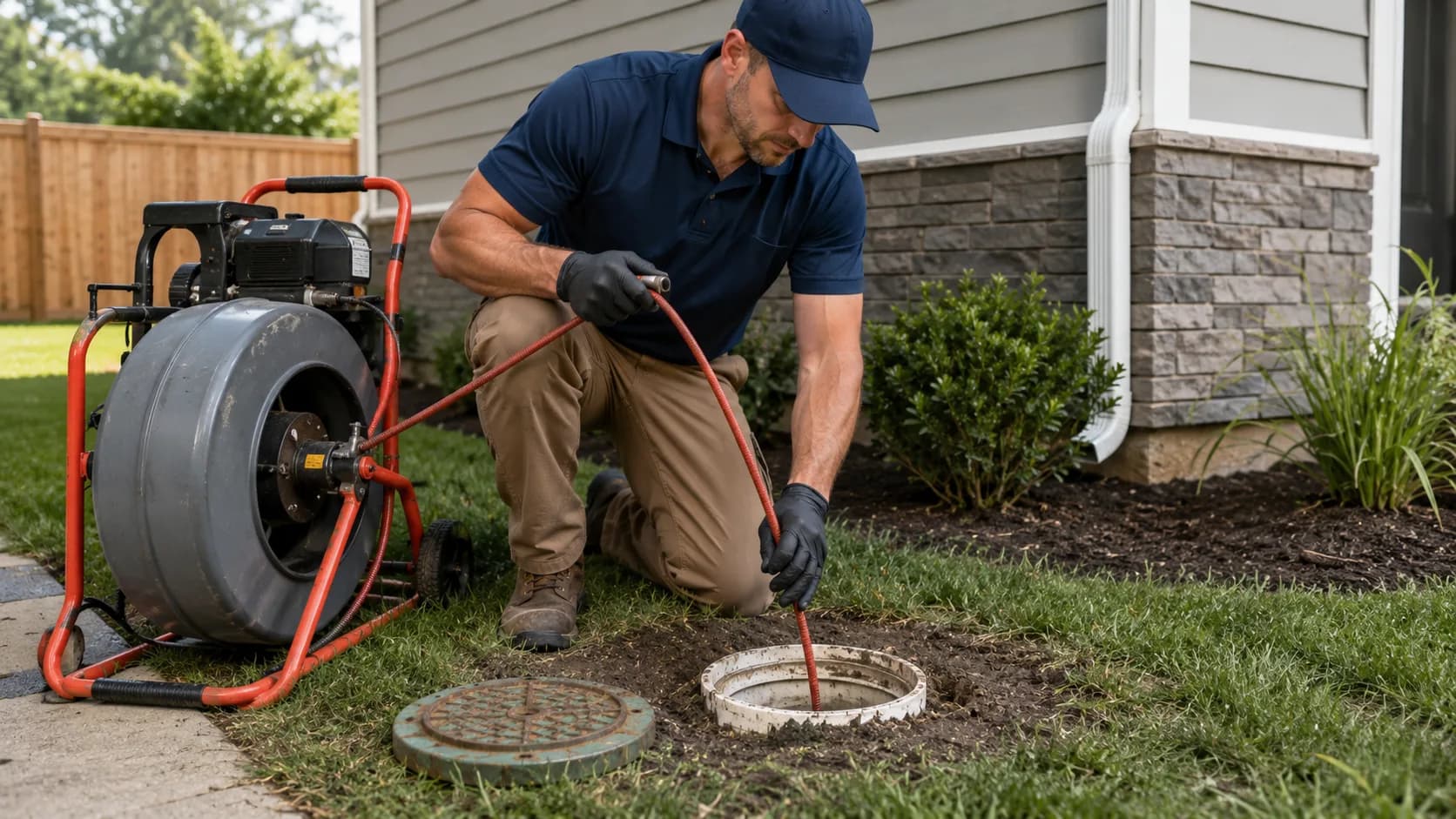
Main lines are cleaned with heavy-duty cabling for roots and hydro jetting for grease and scale. Because the line is buried, pairing cleaning with a camera inspection lets you confirm the pipe is actually clear.
When multiple fixtures are affected together, the shared main line is the usual cause — which is why it's treated differently from a single clogged fixture.
- Licensed & insured
- 24/7 emergency availability
- Same-day service options
- Drain and sewer specialists
Sewer Line Cleaning in Boulder, CO by Boulder Drain Cleaning. Licensed and insured drain and sewer service support for homes and businesses across Boulder and nearby areas.
The main sewer line is the pipe every drain depends on. When it's restricted by roots, grease, or scale, problems rarely stay in one fixture — you may see slow drains, gurgling, and eventually backups in the lowest parts of the home.
Cleaning clears that main artery and restores flow. Pairing it with a camera inspection is worthwhile for any line with a history of trouble, so you can see the pipe's condition rather than guess.
Many older Boulder homes still have clay or cast-iron laterals, where joints and rough interiors give roots and grease something to cling to — a reason periodic cleaning is a practical maintenance step.
Clearing the main sewer line of roots, grease, and scale buildup that restricts flow and causes whole-house backups.
When To Use This Service
Is sewer line cleaning the right call?
Use these scenarios as a quick decision guide. If several apply, this is likely the service to request — though a provider confirms the cause on site.
Several fixtures back up or drain slowly at the same time, suggesting a main-line obstruction.
A basement floor drain or lowest fixture overflows when water is used elsewhere in the home.
Gurgling occurs across multiple drains, indicating air movement in the main line.
Recurring whole-house backups suggest accumulating roots, grease, or scale.
A property with known root intrusion history is due for routine line maintenance.
Sewage odors are present near floor drains or cleanouts without a single isolated source.
A camera inspection has revealed buildup that needs to be cleared before further assessment.
Clogged drain service or sewer-line service?
A quick way to tell whether the problem is local or in the main line.
Clogged drain service
- Usually one fixture or branch line
- Localized symptoms
- Other fixtures work normally
Sewer-line service
- Several fixtures affected
- Backup at a low drain
- Toilets and drains react together
Warning Signs
Know the warning level
Drain symptoms tend to escalate. Catching them at the early or recurring stage is far easier than handling an urgent backup.
- Drainage is slower than usual
- Occasional gurgling from a drain or trap
Good time to request service before it worsens.
- Multiple drains slow or back up at the same time
- Gurgling from toilets or drains when water runs elsewhere
- Sewer odor in the yard, basement, or near floor drains
- Backups appearing in the lowest fixtures first
- Soggy or unusually green patches in the yard over the sewer line
- Clogs that return within weeks of clearing
Worth diagnosing the cause so it stops returning.
- Raw sewage backing up into the home
- All household drains blocked at once
- Sewage surfacing in the yard over the line
- A backup during heavy snowmelt or rain
Common Causes
What leads to sewer line cleaning
Tree-root intrusion
Roots enter pipe joints seeking moisture and grow into masses that snag waste.
Grease & soap buildup
Years of kitchen grease and soap coat the pipe wall, narrowing the line and trapping solids.
Mineral scale
Hard-water minerals can build up on the inside of the pipe, especially in older cast iron.
Pipe bellies
A settled section of pipe holds standing water where sludge accumulates.
Offset joints
Shifting soil can offset joints, creating a ledge that catches debris.
The Process
How the main sewer line is cleaned
Clearing the shared line that several fixtures rely on, then confirming flow.
- 1
Access the cleanout
Reach the main line through the cleanout and identify the likely type and location of the blockage.
- 2
Clear roots & debris
Heavy-duty cabling cuts through roots and breaks up the obstruction along the run.
- 3
Hydro jet if needed
Where grease or scale is heavy, jetting scours the pipe wall back toward its original diameter.
- 4
Camera verification
A camera pass confirms the line is clear and documents the pipe's condition.
- 5
Maintenance guidance
Based on what's found, you get a suggested interval to stay ahead of recurring buildup.
Inspection & Diagnosis
Inspection & diagnosis for sewer line cleaning
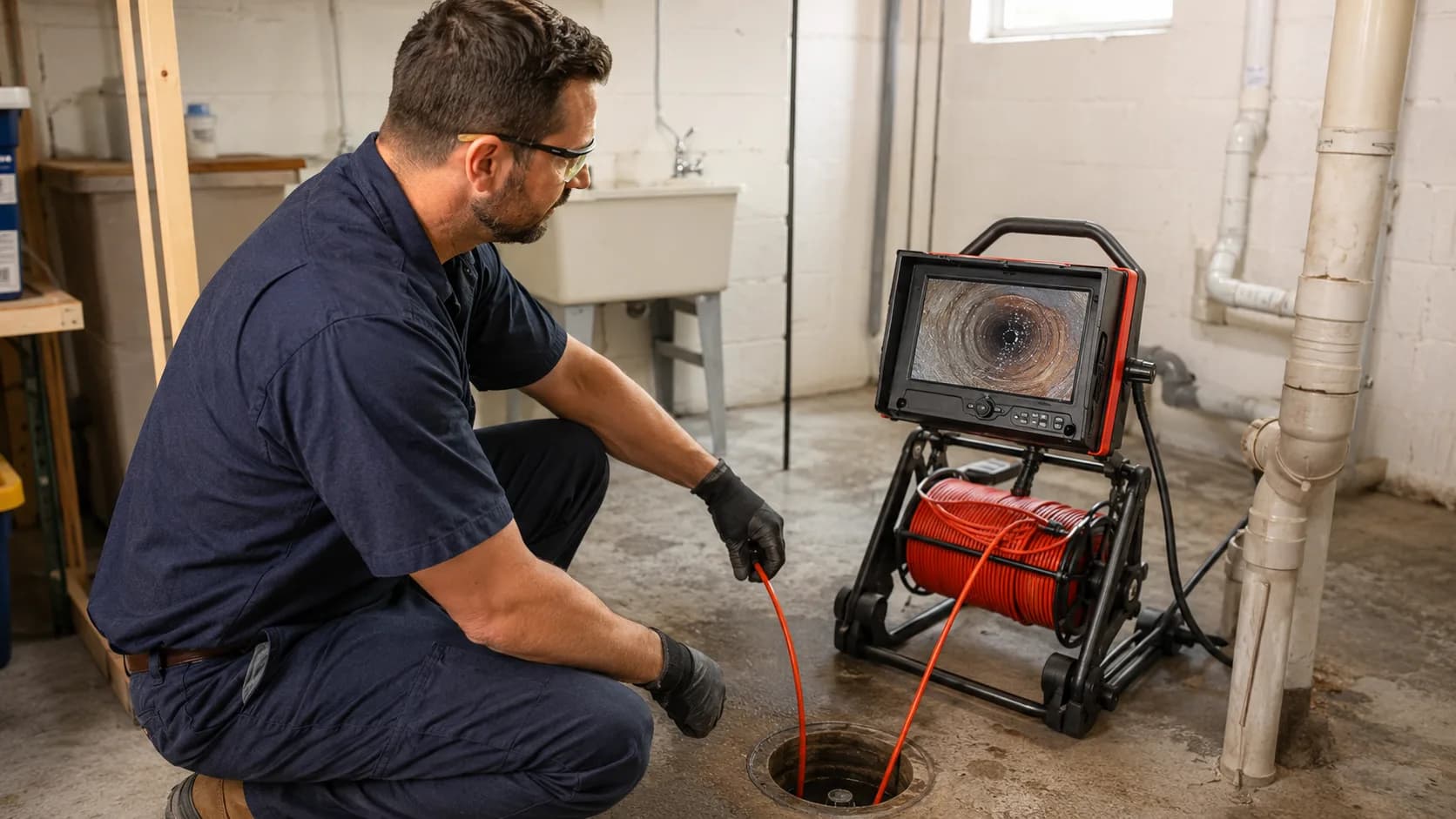
Assessment of the main sewer line often starts by locating a cleanout, which provides direct access to the line without going through individual fixtures. A provider may evaluate how water is backing up, which fixtures are affected, and whether the symptoms point to a partial restriction or a full blockage. Understanding where the slowdown occurs helps determine how far into the line the obstruction may sit.
In many cases a camera inspection is used either before or after cleaning to understand the cause and extent of the buildup. Roots, hardened grease, and mineral scale each behave differently, so identifying the obstruction type can influence whether a cable machine or higher-pressure water jetting is more suitable. This service focuses on removing the buildup to restore flow, and any structural concerns observed are typically noted for separate follow-up.
Limitations
What this service can't do
Every service has limits. Knowing them helps you request the right one.
- Cleaning removes buildup but does not repair cracks, offsets, or collapsed sections of pipe.
- Roots commonly regrow, so cleaning may need to be repeated periodically where intrusion exists.
- Heavy scale or severe root masses may not fully clear with a standard cable machine.
- If the pipe is structurally compromised, cleaning provides only temporary relief.
- Access depends on a usable cleanout; limited access can affect what is possible.
- Cleaning does not prevent future buildup without ongoing maintenance or corrective repair.
When You May Need Another Service
Situations that call for something else
A camera inspection reveals cracks, offsets, or root intrusion through pipe joints.
Structural damage allows buildup and roots to return quickly, and repairing the affected section addresses the underlying cause rather than the symptom.
Sewer Line RepairHardened grease or heavy scale resists a standard cable cleaning.
High-pressure water jetting can scour pipe walls more thoroughly than a cable in cases of dense grease or scale buildup.
Hydro JettingThe line is collapsed or so deteriorated that flow cannot be restored.
A line that can no longer carry flow reliably is generally beyond cleaning and may need to be replaced.
Sewer Line Replacement
Compare Services
How main-line cleaning compares to cable rooter work and high-pressure jetting.
| Factor | Sewer Line Cleaning | Hydro Jetting |
|---|---|---|
| Primary action | Cuts and pulls buildup with a cable | Scours pipe walls with pressurized water |
| Best against | Roots and general obstructions | Grease, sludge, and mineral scale |
| Wall cleaning | Clears the path but leaves residue | More thorough removal of clinging buildup |
| Typical use | Restoring flow after a backup | Deeper cleaning where buildup recurs |
| Limitation | May leave thin residue behind | Not suited to fragile or damaged pipe |
The Value
What sewer line cleaning accomplishes
Helps prevent backups
Clearing the main line before it fully blocks reduces the risk of a messy, costly backup.
Restores flow
Removing buildup returns the line toward full capacity so fixtures drain properly.
Camera-verified
You can see the cleaned line on screen rather than take it on faith.
Informs decisions
Inspection reveals whether you're dealing with maintenance or a developing repair.
Applications
Residential & commercial use

For homeowners
The main sewer line carries waste from the entire home to the public sewer or septic system, so a blockage here affects everything at once. When roots, grease, or scale accumulate, the first signs are often the lowest drains backing up or multiple fixtures slowing together. Requesting sewer line cleaning addresses the shared line rather than any single fixture, which is why it resolves whole-house symptoms that fixture-level clearing cannot.
For homeowners with a history of root intrusion or recurring backups, periodic main-line cleaning is a common maintenance approach to keep flow open. When you request drain service for a main-line issue, an available local service provider can clear the buildup and, where helpful, recommend a camera inspection to understand whether the problem is likely to return.
For property managers & businesses
Commercial buildings place heavier and more constant demand on their main sewer lines, and a blockage can shut down restrooms or kitchens that a business depends on. Property managers often schedule main-line cleaning as part of preventive maintenance to reduce the risk of disruptive backups during business hours. Restaurants and food-service operations in particular contend with grease accumulation that builds up over time.
Because commercial backups can affect many occupants at once, identifying the cause matters as much as clearing it. When you request drain service for a commercial main line, noting the building's usage patterns and any history of backups helps an available local service provider determine whether routine cleaning is sufficient or whether jetting or an inspection should be considered.
Cost Factors
What affects the cost of sewer line cleaning
Pricing varies by situation and is set by the provider. These factors influence it.
Line length & diameter
Longer laterals and larger mains take more time and equipment to clean.
Type & severity of blockage
Heavy roots or hardened grease require jetting and more labor than a light clog.
Cleanout access
An accessible exterior cleanout is simpler than alternative access points.
Camera inspection
Adding verification is a modest cost that reduces repeat visits.
Pipe condition
Fragile pipe may call for a gentler approach and additional assessment.
Questions To Ask
Questions to ask a service provider
Bring these to any provider who follows up on your request.
- Is there an accessible cleanout, or how will the main line be reached?
- What is causing the buildup, and is it likely to be roots, grease, or scale?
- Would a camera inspection help confirm the cause and condition of the line?
- Is cable cleaning enough, or would jetting be more effective for this buildup?
- How likely is this blockage to return, and on what timeline?
- Did anything during cleaning suggest structural damage to the pipe?
- What maintenance schedule would help prevent future backups?
How to prepare
- Locate the main cleanout if you know where it is, and clear access to it.
- Move stored items away from basement floor drains and lower-level fixtures.
- Note which fixtures are affected and the order in which backups occur.
- Record any history of previous backups, cleanings, or root problems.
- Avoid using water in the home during the appointment unless asked.
- Protect flooring near affected drains in case of residual water.
Safety guidance
- Treat any backed-up water as contaminated and avoid skin contact.
- Keep children and pets out of areas with standing water or sewage odor.
- Do not run water through the system while it is actively backing up.
- Ventilate areas where sewer gas odors are present.
- Disinfect surfaces that came into contact with backed-up water.
- Avoid attempting to open a pressurized or heavily backed-up cleanout yourself.
Prevention & maintenance
- Schedule periodic cleaning if your property has a known history of root intrusion.
- Keep grease, fats, and oils out of drains to limit main-line buildup.
- Avoid flushing wipes, hygiene products, and other non-degradable items.
- Consider a camera inspection to catch buildup before it causes a backup.
- Address slow whole-house drainage early rather than waiting for a full blockage.
- Be mindful of trees and large shrubs planted near the sewer line path.
Why A Professional
Why sewer line cleaning is best handled by a professional
Cleaning a main line uses commercial equipment most homeowners don't have — root-cutting heads, high-pressure jetters, and a sewer camera. A small consumer auger often just bores a hole through a root mass that closes again within weeks.
More importantly, a trained eye with a camera distinguishes routine root intrusion from a cracked pipe — getting that right is what separates routine maintenance from an avoidable emergency.
In the Boulder area
Front Range water is high in calcium and magnesium, and over years that mineral scale builds up inside sewer lines, narrowing the bore and causing recurring slow drains that snaking alone will not fully clear. In Boulder's older neighborhoods, roots from mature trees compound the problem by entering clay lateral joints, so buildup often returns even after a line has been cleared.
This combination of hard-water scale and root intrusion is why recurring main-line buildup is common in the area. When whole-house symptoms appear, an available local service provider can clear the line and, where useful, recommend a camera inspection to confirm whether scale, roots, or a structural issue is driving the repeat backups.
Main-line cleaning comes up most in Longmont, Niwot, and Gunbarrel, where mature trees and older laterals let roots and hard-water scale narrow the pipe. Pairing the cleaning with a sewer camera inspection confirms whether it's routine maintenance or a developing repair.
Answers
Frequently Asked Questions
Common questions about sewer line cleaning.
How often should a sewer line be cleaned?
For newer homes with no history of problems, only as needed. Older homes with clay or cast-iron pipe and mature trees nearby often benefit from periodic preventive cleaning to stay ahead of root intrusion.
What's the difference between drain cleaning and sewer line cleaning?
Drain cleaning clears a single fixture's branch line. Sewer line cleaning clears the main pipe that all branches feed into. When several fixtures fail together, the problem is usually in the main line.
Will cleaning remove tree roots permanently?
Cleaning removes the existing root mass and restores flow, but roots can re-enter through the same joint over time. A camera inspection shows whether routine cleaning is enough or a repair is needed to keep roots out.
Do you use a camera to check the line?
For any line with a history of clogs, a camera pass after cleaning confirms it's clear and documents the pipe's condition so you know whether it's maintenance or a developing repair.
Can a dirty sewer line cause odors in my home?
It can. Buildup and partial blockages trap waste that produces sewer gas, and a restricted line can disrupt venting. Cleaning often resolves the odor.
Is hydro jetting safe for older pipe?
Often, but it should be inspected first. If a camera shows a cracked or badly corroded line, pressure is adjusted or repair is recommended so jetting doesn't worsen a fragile pipe.
How long does sewer line cleaning take?
A typical residential main-line cleaning takes roughly one to three hours depending on the line length, the blockage, and whether camera verification is included.
Can I prevent root intrusion between cleanings?
Routine cleaning is the most reliable approach. Avoiding new plantings over the line and sealing cracked joints with a repair or liner are the longer-term fixes.
Free Estimate
Request a Free Drain Service Estimate
Share the drain or sewer problem, location, and preferred timing. Your request may be matched with an available local service provider for follow-up.
Any drain or sewer issue
Clogs, recurring backups, sewer-line questions, jetting, rooter, or camera inspections.
What to include
Affected fixtures, what you're seeing, how long it's lasted, and home vs. commercial.
Areas covered
Boulder and nearby communities across Boulder County and the Front Range.
What happens next
Your request may be matched with an available local service provider for follow-up.
Submitting this form allows us to contact you about your request and, where appropriate, connect you with a local service provider.
Form not loading? Open the estimate request.
Related Services
You might also need
Sewer Camera Inspection
Video inspection that shows the inside of a sewer line — roots, cracks, bellies, and blockages.
View serviceHydro Jetting
High-pressure water cleaning that scours grease, scale, and roots from the full pipe wall.
View serviceSewer Line Repair
Repairing cracked, offset, or root-damaged sewer pipe — including trenchless options.
View serviceSewer Line Cleaning requests across Boulder and nearby communities.
Have a drain or sewer problem in Boulder?
Tell us what's happening and request a free estimate from Boulder Drain Cleaning — licensed, insured, and available 24/7 for emergencies.