Sewer Line Repair in Boulder, CO
A cracked or root-damaged sewer line doesn't always mean tearing up the yard. A camera diagnosis identifies the exact problem so the least invasive lasting fix can be chosen.
- Residential and commercial requests
- Boulder-area service coverage
- Free, no-obligation estimate request
Service at a glance
- Best suited for
- A cracked, leaking, or root-damaged section of an otherwise sound line.
- Common signs
- Backups keep returning, or a camera shows cracks, breaks, or root intrusion.
- Tools that may be used
- Sewer camera inspection, line locating, spot or trenchless repair tools
Related service
Sewer Line ReplacementWhen does a sewer line need repair instead of cleaning?
Quick answer
A sewer line needs repair, not just cleaning, when the pipe itself is damaged — cracks, offset or separated joints, holes from corrosion, or root intrusion that has broken the pipe wall. Repeated backups soon after cleaning are a common sign. A camera inspection confirms whether cleaning will hold.
When a pipe is damaged, cleaning only buys time — cracks and gaps let waste escape and roots and groundwater back in, so the line clogs again regardless of how well it's cleared.
Repairs start with a camera inspection and a precise locate, so the damage is found before any digging and the method is matched to the actual problem.
- Licensed & insured
- 24/7 emergency availability
- Same-day service options
- Drain and sewer specialists
Sewer Line Repair in Boulder, CO by Boulder Drain Cleaning. Licensed and insured drain and sewer service support for homes and businesses across Boulder and nearby areas.
When a sewer line is physically damaged, cleaning is a temporary measure. Repair fixes the pipe itself so the underlying cause stops recurring.
Options range from a spot repair for an isolated break, to trenchless cured-in-place pipe (CIPP) lining that rehabilitates a longer run without a full trench, to traditional dig-and-replace where the pipe is too far gone.
Boulder's clay soils, freeze-thaw cycles, and mature trees are hard on laterals, and older clay or Orangeburg pipe is especially prone to cracking — which is why an accurate diagnosis is the first step.
Repairing a localized defect such as a crack, offset joint, or root-damaged section of sewer pipe, including trenchless lining where suitable.
When To Use This Service
Is sewer line repair the right call?
Use these scenarios as a quick decision guide. If several apply, this is likely the service to request — though a provider confirms the cause on site.
A camera inspection has identified a cracked or fractured section of pipe.
An offset or separated joint is allowing roots or soil to enter the line.
Recurring backups continue despite repeated cleaning of the same area.
A localized section shows damage while the rest of the line remains sound.
Root intrusion is entering through a defined point that can be isolated and repaired.
A leak or infiltration is suspected at a specific location along the line.
An inspection suggests damage is contained enough to repair rather than replace.
Clogged drain service or sewer-line service?
A quick way to tell whether the problem is local or in the main line.
Clogged drain service
- Usually one fixture or branch line
- Localized symptoms
- Other fixtures work normally
Sewer-line service
- Several fixtures affected
- Backup at a low drain
- Toilets and drains react together
Warning Signs
Know the warning level
Drain symptoms tend to escalate. Catching them at the early or recurring stage is far easier than handling an urgent backup.
- Drainage is slower than usual
- Occasional gurgling from a drain or trap
Good time to request service before it worsens.
- Backups or slow drains that return within weeks of a cleaning
- Sewer smell in the yard or basement
- Soggy, sunken, or unusually lush patches over the line
- Cracks or settling near the sewer route
- Rodent or insect activity near drains
- A camera inspection showing cracks, offsets, or root intrusion
Worth diagnosing the cause so it stops returning.
- Sewage surfacing in the yard or backing up into the home
- A collapsed line leaving the home with no working drains
- A sinkhole or sudden depression over the sewer route
- Sewage contamination threatening living space
Common Causes
What leads to sewer line repair
Tree-root fracturing
Roots that enter a small joint gap expand as they grow, eventually cracking the pipe.
Ground movement
Freeze-thaw cycles and expansive soils can shift pipe and offset joints.
Corrosion & age
Cast-iron and Orangeburg pipe deteriorate over time, forming holes and weak spots.
Bellied sections
A settled length of pipe holds water and waste, accelerating problems at that low point.
Separated joints
Joints that pull apart create gaps where waste leaks out and roots get in.
Diagnosis To Repair
How a sewer line repair is approached
Confirming the defect with a camera before choosing a repair method.
Findings are reviewed with you before any repair, jetting, or further work is recommended.
- 1
Camera inspection & locate
Inspect the line on camera and mark the exact depth and location of the damage.
- 2
Review the options
See the footage and the recommendation — spot repair, trenchless lining, or section replacement.
- 3
Prepare the line
Clean and clear the line so the repair surface is sound and ready.
- 4
Perform the repair
Complete a spot repair, install a cured-in-place liner, or replace the damaged section.
- 5
Verify & restore
A final camera pass confirms the repair and the work area is restored.
Inspection & Diagnosis
Inspection & diagnosis for sewer line repair
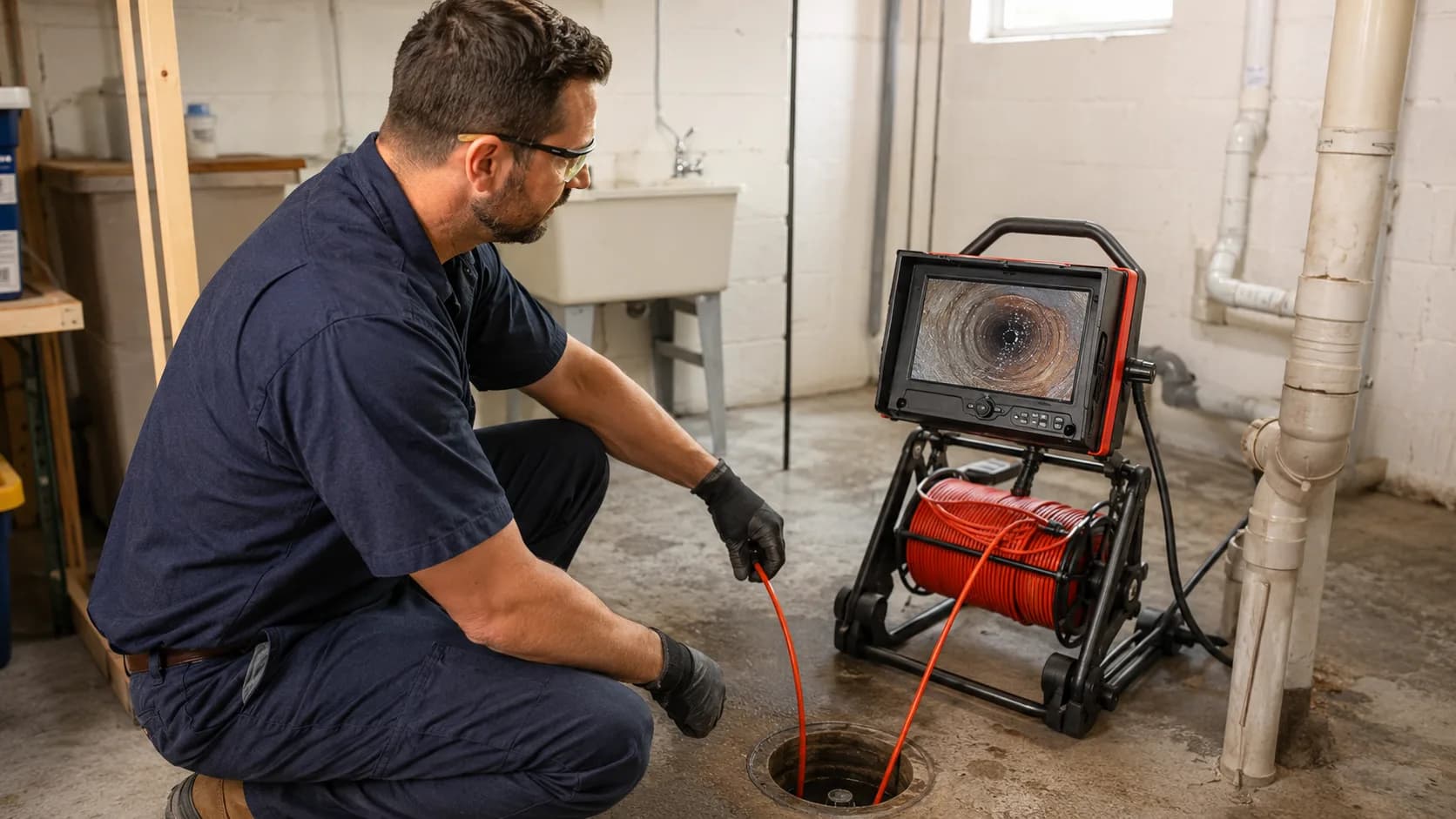
Repair decisions almost always depend on a camera inspection to locate the defect precisely and understand its nature. A provider may evaluate the type of damage, its position along the line, the depth of the pipe, and the surrounding conditions before recommending an approach. Cleaning the line first is often necessary so the camera can produce a clear view of the pipe walls and joints.
Once the defect is located, the assessment turns to whether a trenchless method such as cured-in-place lining is suitable or whether a section must be accessed by excavation. Factors such as the pipe's overall condition, the number of defects, alignment, and access all influence what is feasible. Trenchless lining can repair certain defects without full excavation, but it depends on the host pipe being structurally sound enough to accept a liner.
Limitations
What this service can't do
Every service has limits. Knowing them helps you request the right one.
- Repair is only appropriate when damage is localized and the rest of the line is sound.
- Trenchless lining requires a host pipe in good enough condition to support a liner.
- Severe collapses, multiple defects, or extensive deterioration may exceed what repair can address.
- Repairs do not stop root regrowth elsewhere along an otherwise aging line.
- Some defects are not accessible or repairable without excavation despite trenchless options.
- A repaired section does not extend the life of the remaining original pipe.
When You May Need Another Service
Situations that call for something else
Inspection reveals the line is collapsed or deteriorated along most of its length.
Widespread damage generally cannot be addressed with a localized repair, and replacing the line is often the more durable solution.
Sewer Line ReplacementBuildup must be cleared before the pipe walls can be evaluated for repair.
A line obstructed by roots or grease must usually be cleaned before a camera can confirm the location and extent of any structural defect.
Sewer Line CleaningThe exact location and nature of the suspected defect is not yet confirmed.
A camera inspection is typically required to pinpoint the defect before any repair method can be selected.
Sewer Camera Inspection
Compare Services
How localized sewer repair compares to full line replacement.
| Factor | Sewer Line Repair | Sewer Line Replacement |
|---|---|---|
| Scope of work | Targets a defined defect or section | Replaces the entire run of pipe |
| Suitable when | Damage is localized and pipe is sound | Line is failing along most of its length |
| Excavation | Often limited or trenchless | More extensive, by trench or pipe bursting |
| Remaining pipe | Original pipe stays in place | Replaced with new pipe throughout |
| Best fit | Isolated cracks, joints, or root points | Collapsed or widely deteriorated lines |
The Value
What sewer line repair accomplishes
Trenchless options
Cured-in-place lining can repair many lines through existing access, sparing the yard and hardscape.
Addresses the cause
Repairing the pipe stops the cycle of clearing the same line repeatedly.
Seals the line
A sealed pipe keeps wastewater in and groundwater and roots out.
Protects the property
Catching damage early helps prevent sinkholes and full-line collapse.
Applications
Residential & commercial use
For homeowners
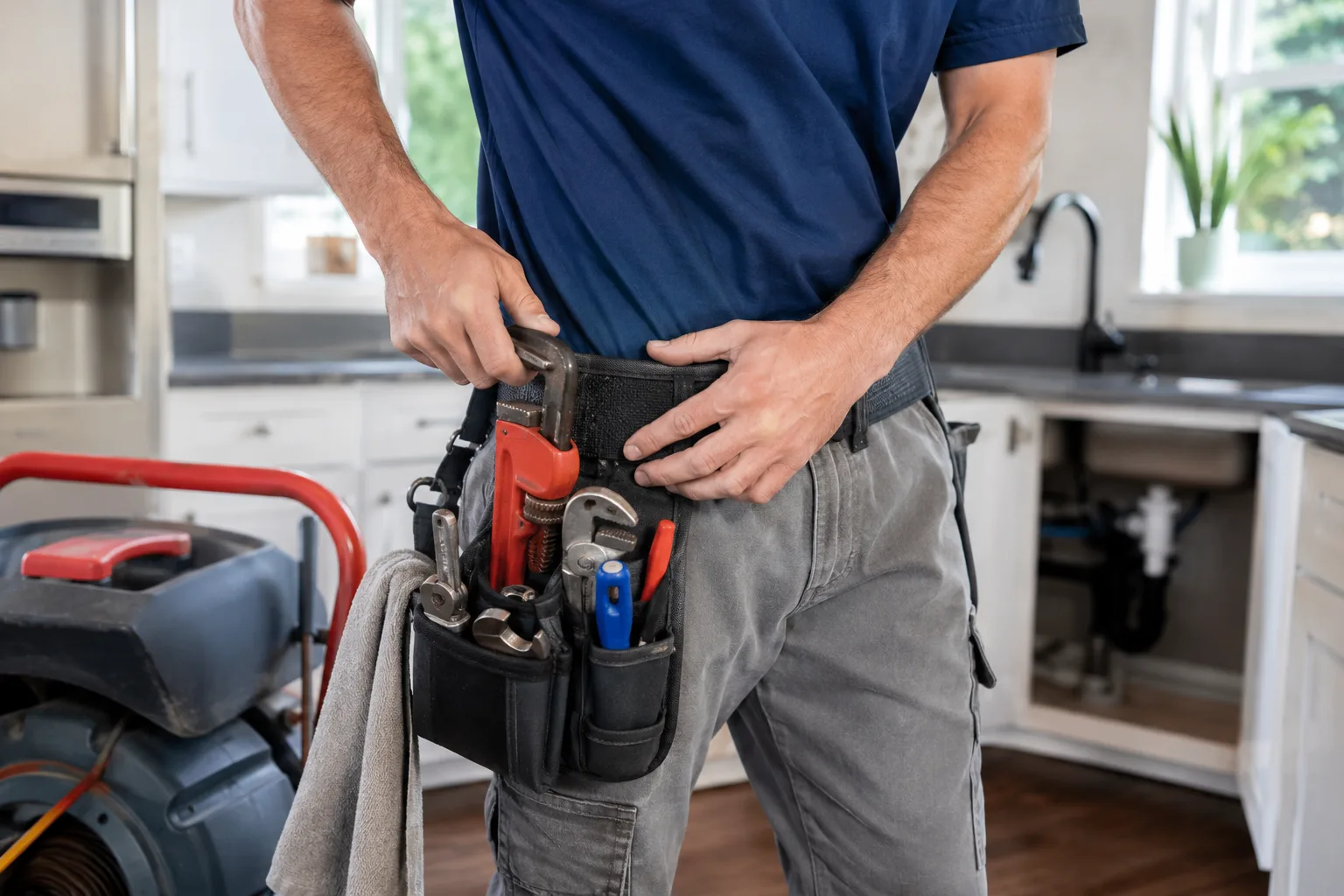
When a homeowner faces recurring backups in the same spot or an inspection reveals a cracked joint, a localized repair can be an effective alternative to replacing the whole line. Repair focuses on the damaged section while preserving the rest of the pipe, which is appropriate when the surrounding line remains in sound condition. Confirming this with a camera inspection is an essential first step.
Because repair methods range from trenchless lining to a small excavation, the right choice depends on the specific defect and the pipe's condition. When you request drain service for a suspected line defect, an available local service provider can review the inspection findings and explain which repair approaches are feasible for that particular situation.
For property managers & businesses
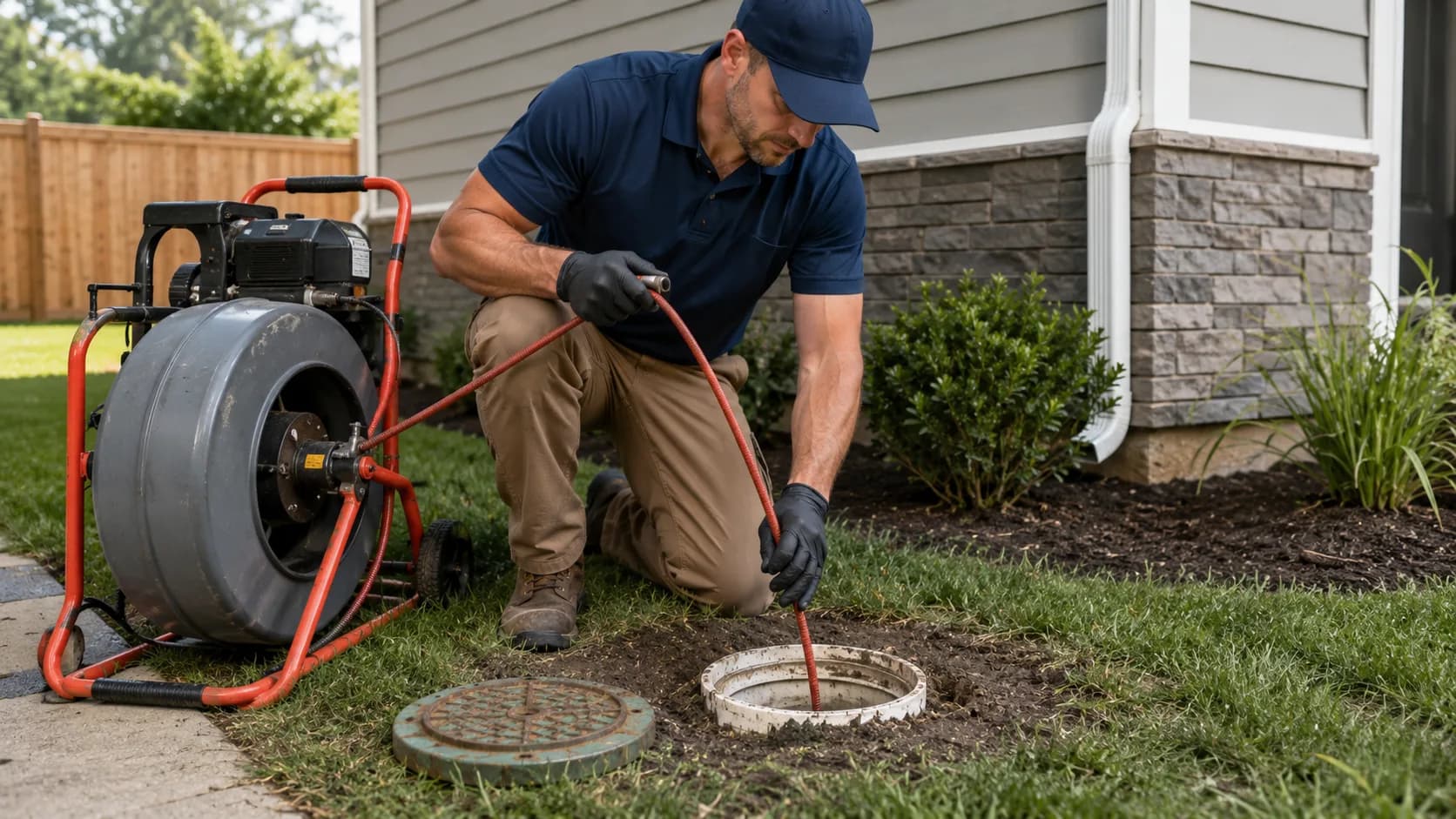
For commercial properties, a localized sewer repair can minimize disruption by addressing a defect without the broader impact of a full replacement. Property managers often weigh repair against replacement based on inspection findings, the age and condition of the line, and how much business interruption each option involves. A contained repair can be attractive when only one section is failing.
In a commercial setting, the decision frequently hinges on whether the rest of the line is likely to fail soon as well. When you request drain service for a commercial line defect, sharing prior inspection records and maintenance history helps an available local service provider assess whether a targeted repair is durable or whether wider work should be considered.
Cost Factors
What affects the cost of sewer line repair
Pricing varies by situation and is set by the provider. These factors influence it.
Repair method
A spot repair, a full liner, and open-trench replacement differ in cost.
Depth & length
Deeper pipe and longer damaged sections require more labor and material.
Accessibility
Damage under a driveway, tree, or structure is more involved to reach and restore.
Pipe material
The existing material affects which repair methods are viable.
Permits & restoration
Local permitting and surface restoration factor into the total.
Questions To Ask
Questions to ask a service provider
Bring these to any provider who follows up on your request.
- What did the camera inspection show about the location and type of damage?
- Is the surrounding pipe sound enough for a localized repair?
- Is trenchless lining an option here, or is excavation required?
- How many defects are present along the line?
- What is the likely durability of a repair versus a full replacement?
- Will the repair address the root intrusion point completely?
- What follow-up inspection would confirm the repair is sound?
How to prepare
- Have any prior camera inspection footage or reports available to share.
- Note the history of backups, including how often they recur and where.
- Identify the approximate path of the sewer line if site records exist.
- Clear access to cleanouts and any areas above the suspected defect.
- Mark sprinkler lines, landscaping, or utilities near the work area if known.
- Ask about access needs in advance if excavation may be involved.
Safety guidance
- Keep clear of any open excavation, which can be unstable and hazardous.
- Treat exposed sewer pipe and surrounding soil as contaminated.
- Do not enter trenches or confined areas associated with the work.
- Ensure underground utilities are located before any digging takes place.
- Keep children and pets away from equipment and open work areas.
- Follow any guidance to limit water use while the repair is underway.
Prevention & maintenance
- Address root intrusion early before it widens cracks or joints.
- Consider periodic camera inspections to catch defects while still localized.
- Avoid planting trees with aggressive roots near the sewer line path.
- Keep grease and non-degradable items out of the line to reduce stress on joints.
- Act on recurring backups promptly rather than repeatedly clearing the same spot.
- Maintain records of inspections and repairs for future reference.
Why A Professional
Why sewer line repair is best handled by a professional
Repair decisions hinge on an accurate diagnosis. Misreading a bellied pipe as a simple clog, or replacing a whole line when a spot repair would do, are costly mistakes a camera-based diagnosis helps avoid.
Trenchless lining in particular requires specialized equipment and training to install correctly, and sewer work generally requires proper permitting and inspection.
In the Boulder area
Much of Boulder's older housing still runs aging clay, cast-iron, and galvanized sewer materials, and mid-century neighborhoods such as Table Mesa and Martin Acres commonly have 1950s and 60s cast-iron and galvanized branch lines that develop cracks and offset joints over time. Shallow laterals in the area are also stressed by winter freeze and thaw cycles, which can open or widen a defect at a single point.
Where damage is contained to one section, a targeted repair can address it without replacing the whole run. When you request drain service for a suspected defect, an available local service provider can use camera inspection findings to advise whether the pipe material and surrounding condition support a localized repair.
Damaged laterals show up most in the historic cores of Lafayette, Louisville, and Lyons, where original clay and cast iron have taken a century of freeze-thaw and root pressure. A sewer camera inspection pinpoints the break first, and full sewer line replacement is the call only when the pipe is failing along its length.
Answers
Frequently Asked Questions
Common questions about sewer line repair.
What is trenchless sewer repair?
Trenchless repair fixes a sewer line without a long trench. The most common method, cured-in-place pipe (CIPP) lining, inserts a resin-saturated liner into the existing pipe and cures it in place — usually through one or two small access points.
How do I know if I need repair or just cleaning?
If a line backs up again within weeks of cleaning, or a camera shows cracks, offset joints, holes, or root intrusion through the pipe wall, repair is needed. Cleaning only restores flow in a structurally sound pipe.
Can you repair a sewer line without digging up my yard?
Often, yes. Many repairs qualify for trenchless lining or a spot repair through existing access. Severely collapsed pipe may still require excavation of that section.
How long does a cured-in-place liner last?
A properly installed CIPP liner is generally rated to last 50 years or more. A quality spot repair or section replacement is also a long-term fix.
Do I need a permit for sewer repair?
Most sewer repairs require a permit and inspection. A qualified contractor pulls the proper permits and coordinates inspection as part of the work.
Why do tree roots keep breaking my sewer line?
Roots enter through small joint gaps or cracks seeking moisture, then expand as they grow and fracture the pipe. The lasting fix is sealing those entry points with a liner or replacing the damaged section.
What's the difference between repair and replacement?
Repair fixes a specific damaged section while keeping the rest of the line. Replacement installs an entirely new line and is recommended when the pipe is failing along most of its length.
Will homeowner's insurance cover sewer repair?
Coverage varies by policy. Damage from normal wear, age, or roots is often excluded, while some sudden backups may be covered under a separate endorsement. Camera footage and documentation help support any claim.
Free Estimate
Request a Free Drain Service Estimate
Share the drain or sewer problem, location, and preferred timing. Your request may be matched with an available local service provider for follow-up.
Any drain or sewer issue
Clogs, recurring backups, sewer-line questions, jetting, rooter, or camera inspections.
What to include
Affected fixtures, what you're seeing, how long it's lasted, and home vs. commercial.
Areas covered
Boulder and nearby communities across Boulder County and the Front Range.
What happens next
Your request may be matched with an available local service provider for follow-up.
Submitting this form allows us to contact you about your request and, where appropriate, connect you with a local service provider.
Form not loading? Open the estimate request.
Related Services
You might also need
Sewer Line Replacement
Full sewer line replacement — trenchless and traditional — when a pipe is beyond repair.
View serviceSewer Camera Inspection
Video inspection that shows the inside of a sewer line — roots, cracks, bellies, and blockages.
View serviceSewer Line Cleaning
Clearing roots, grease, and buildup from the main sewer line before it causes a backup.
View serviceSewer Line Repair requests across Boulder and nearby communities.
Have a drain or sewer problem in Boulder?
Tell us what's happening and request a free estimate from Boulder Drain Cleaning — licensed, insured, and available 24/7 for emergencies.